
Real-time staff visibility across every shift.
Safari AI turns your existing cameras into a live workforce analytics system. Monitor staff engagement, track workstation utilization, and optimize staffing decisions across every shift.
↻ Click to see different dashboards













Without staff detection data, engagement and productivity are invisible.
Most businesses have no reliable way to measure staff engagement at individual workstations, track active vs. idle time, or identify performance gaps in real time. The result is missed productivity, reactive staffing decisions, and no basis for performance-based recognition.
- —No visibility into which workstations are underperforming until productivity numbers arrive days later
- —Staff allocation is based on schedules and gut feel rather than real-time engagement data
- —Performance-based compensation lacks the granular data needed to reward top performers fairly
- —Customer service gaps go undetected because no system flags when front-line staff are disengaged
Validated against ground-truth manual observation at deployment. If a camera view underperforms, we retune before you go live at no cost.
Leverage your existing cameras. No construction. Live in under two weeks.
Camera Review
We assess your existing CCTV or IP camera feeds remotely. Compatible views proceed; incompatible ones are flagged before any commitment.
On-Prem Deployment
A compact server is installed on-site and connected to your camera streams. All video is processed locally. Nothing leaves your network.
Calibrate & Go Live
Models are validated against manual observation. Once accuracy is approved, you're live with real-time dashboards and API access from day one.
How leading operators use Safari AI staff detection to drive decisions.
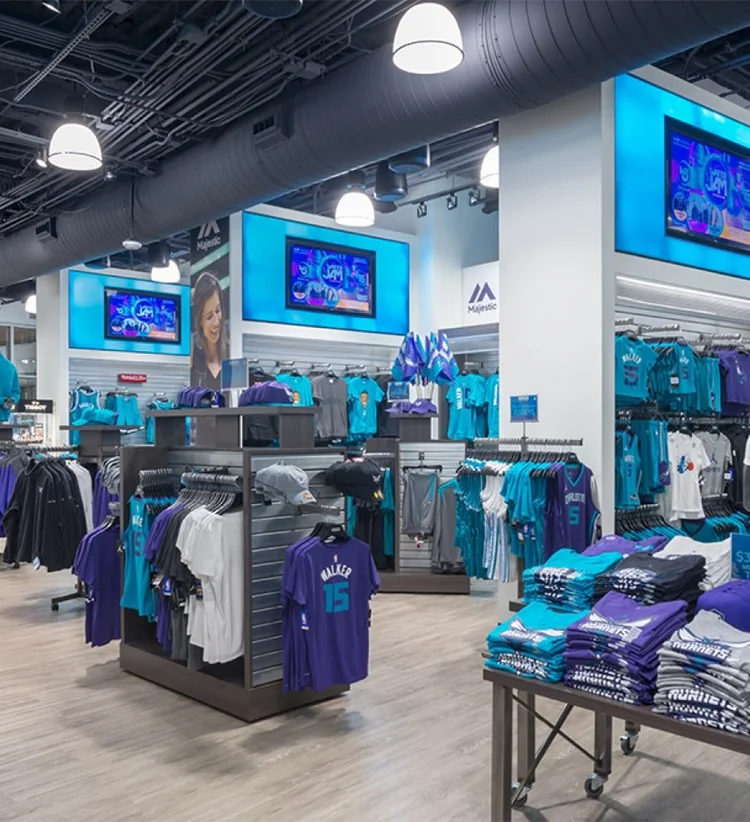
Charlotte Hornets
The Charlotte Hornets leverage existing cameras to measure real-time KPIs including guest entrance throughput, concessions queue analytics, and arena heatmapping to drive higher revenue without adding staff.
Read Hornets Case Study Stadiums, Arenas & Venues
Reconext
Reconext's Mexicali facility optimizes manufacturing operations across multiple third-party production lines by measuring critical operational KPIs including staff engagement analytics and dynamic staff operations.
Read Reconext Case Study IT & Electronic Services
StorageMart
StorageMart improves speed of service by measuring staff engagement analytics, front desk dwell time analysis, and parking occupancy monitoring through existing camera infrastructure.
Read StorageMart Case Study Commercial Real EstateEverything staff analytics should do, and actually does.
Correlate staff engagement with productivity at every workstation.
Track utilization patterns and engagement alerts across every seat.
Granular productivity data to support recognition and compensation.
Understand when and where staff are needed to reduce labor costs.
Performance Monitoring
Monitors worker activity levels at manufacturing stations and service desks to correlate engagement with productivity, enabling early intervention when performance falls below benchmarks.
Workstation Analytics
Tracks active seat monitoring, utilization patterns, and engagement alerts to help businesses optimize staffing decisions, reduce idle time, and improve operational efficiency across shifts.
Performance-Based Insights
Real-time staff detection enables performance-based compensation decisions and individual worker recognition by providing granular productivity data for each employee, by station and by shift.
Resource Allocation
Staff engagement monitoring helps businesses understand when and where employees are needed for customer service, enabling better allocation and reduced labor costs without relying on guesswork.
Frequently Asked Questions
-
Safari AI delivers 99%+ accuracy on pedestrian and footfall counts across indoor and outdoor environments. Accuracy is validated against manual ground-truth counts during deployment, and our computer vision models are trained on enterprise-scale datasets from theme parks, stadiums, retail destinations, and QSRs. If a camera view underperforms, we tune the model to your specific environment before you go live.
-
No. Safari AI works with the CCTV and IP cameras you already have — no camera rip-and-replace, no construction, no re-wiring. Deployment requires an on-premise server to process the video feeds locally at your site, which we spec and configure as part of onboarding. Your existing camera infrastructure stays exactly as it is.
-
Most customers are live within days to a few weeks, depending on server provisioning and site access. After an initial camera review to confirm compatibility, we install the on-prem server, connect your existing camera feeds, calibrate the models, and validate accuracy against your baselines.
-
Safari AI is built for high-density venues — we measure crowd counts and pedestrian flow at theme parks, NHL and NBA arenas, outlet centers, and stadium concourses. Our models handle occlusion, overlapping visitors, and non-linear movement patterns that break traditional sensor-based or beam-break counting systems. Reference clients include LEGOLAND, the Charlotte Hornets, and the Calgary Flames.
-
Yes. Counts and analytics are available through live dashboards, scheduled exports, and REST APIs, which means you can pipe footfall data into Tableau, Power BI, Snowflake, your POS, or any internal system. Most enterprise customers run Safari AI alongside existing BI and RevOps workflows rather than as a standalone dashboard.
-
Pricing is per-camera and scales based on the number of cameras, sites, and measurements you need — pedestrian counts, occupancy, dwell time, queue wait, and more can be layered on the same feeds. We offer a free 90-day pilot using your existing cameras with no credit card required, so you can validate accuracy and ROI before committing. Contact us for a tailored quote.
See exactly what your cameras can do.
Evaluate Safari AI on your existing camera infrastructure for 30 days. No credit card, no commitment.
30-day free pilot · No credit card required · Uses your existing cameras · Video processed on-premise
Frequently Asked Questions
How accurate is Safari AI's footfall counting?
Safari AI delivers 99%+ accuracy on pedestrian and footfall counts across indoor and outdoor environments. Accuracy is validated against manual ground-truth counts during deployment. If a camera view underperforms, we retune the model to your specific environment before you go live, at no additional cost.
Do I need to replace my cameras to use Safari AI?
No. Safari AI works with the CCTV and IP cameras you already have. No rip-and-replace, no construction, no re-wiring. An on-premise server is installed to process video locally; your existing camera infrastructure stays exactly as it is.
How long does Safari AI deployment take?
Most customers are live within days to a few weeks. After a camera compatibility review, we install the on-prem server, connect camera feeds, calibrate the models, and validate accuracy against your baselines before going live.
Can Safari AI handle high-density crowds?
Yes. Safari AI is built for high-density venues — theme parks, NBA and NHL arenas, outlet centers, and stadium concourses. Models handle occlusion, overlapping visitors, and non-linear movement that defeats traditional beam-break sensors. Clients include LEGOLAND, Charlotte Hornets, and Calgary Flames.
Can Safari AI integrate with Tableau, Power BI, Snowflake, or our POS?
Yes. Footfall counts and analytics are available via live dashboards, scheduled exports, and a REST API. You can pipe data into Tableau, Power BI, Snowflake, your POS, or any internal system. Most customers run Safari AI alongside existing BI and RevOps workflows.
How does Safari AI pricing work?
Pricing is per-camera and scales with the number of cameras, sites, and measurement types. Pedestrian counts, occupancy, dwell time, queue wait time, and more can be layered on the same feeds. A free 30-day pilot with no credit card required is available so you can validate accuracy and ROI before committing.
IR beam-break sensors are documented to miscount in high-traffic or wide-entrance conditions due to simultaneous crossings and non-human obstructions. Accuracy in crowd conditions can fall to 60 to 85%, representing a 15 to 40% undercount error. Sources: People Counting Systems — Infrared Sensors; V-Count — People Counting Technologies Guide; Milesight VS360 IR Sensor (up to 80% accuracy noted).